Seven people. Thirty days. Practice on your own, deepened together, and carried home.
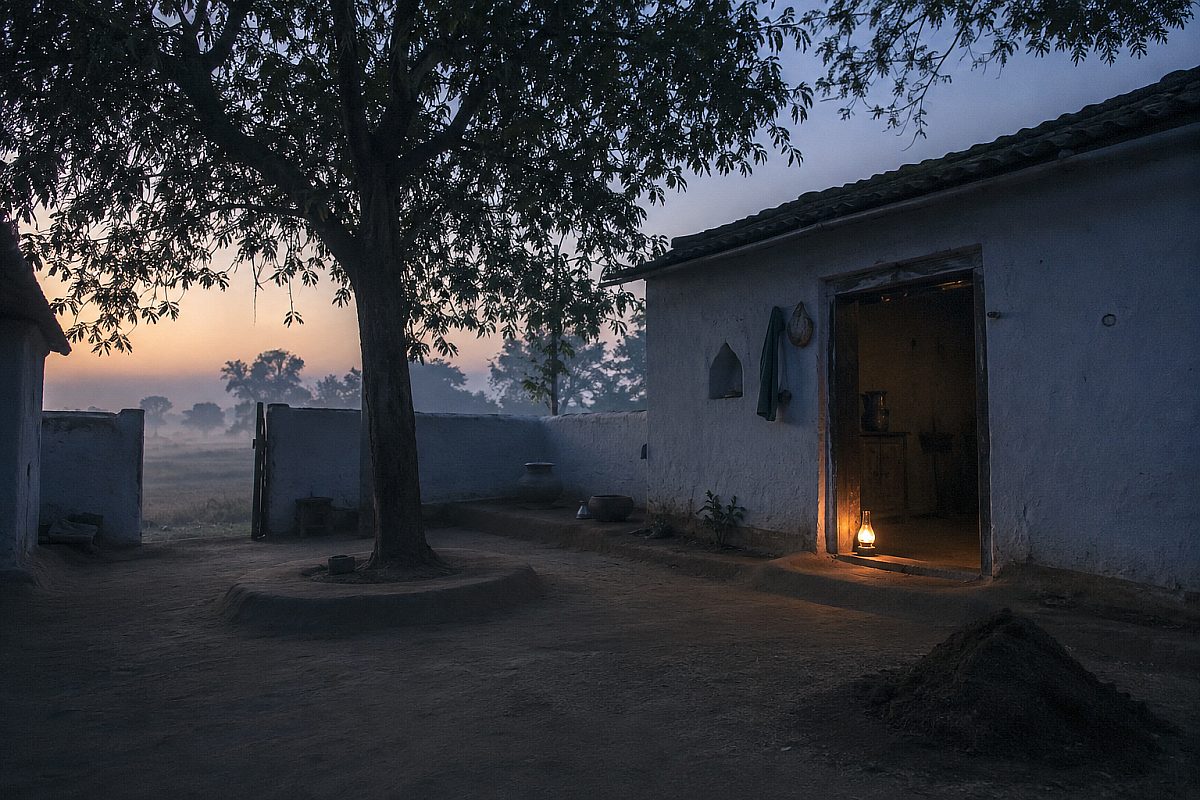
An hour before dawn, six companions, and a door that stays open.
Sit for an hour before dawn, every day.
Do it alongside six others, and let that change you.
Together, work out what small piece of work is really yours.
Then go home and keep at it for years. The month is just the beginning.
Put plainly: this isn't mainly a place to develop a project. It's a place where people doing work they care about can become a little less divided inside, a little less guarded with each other, and clearer about what is theirs to do. The work gives us something to practise on. What actually changes is the person, among other people.
For most of history, if you wanted real solitude you had to leave ordinary life to get it. You went into the forest, took vows, or walked until the road ran out. Loneliness was common enough. Solitude you chose and could keep up was rare, and a lot of the contemplative traditions we've inherited exist to make it possible.
Now it's easy. We have machines that listen without interrupting, agree with us, remember everything and ask for nothing back. Much of the friction of being with other people has been designed away, including the useful friction. What's left looks like company but doesn't carry its weight, and a lot of the good was in the weight.
We aren't only social by preference. Some things in us heal only in the company of another person who is actually there. Over the last few decades we've built a world where that is getting harder to find.
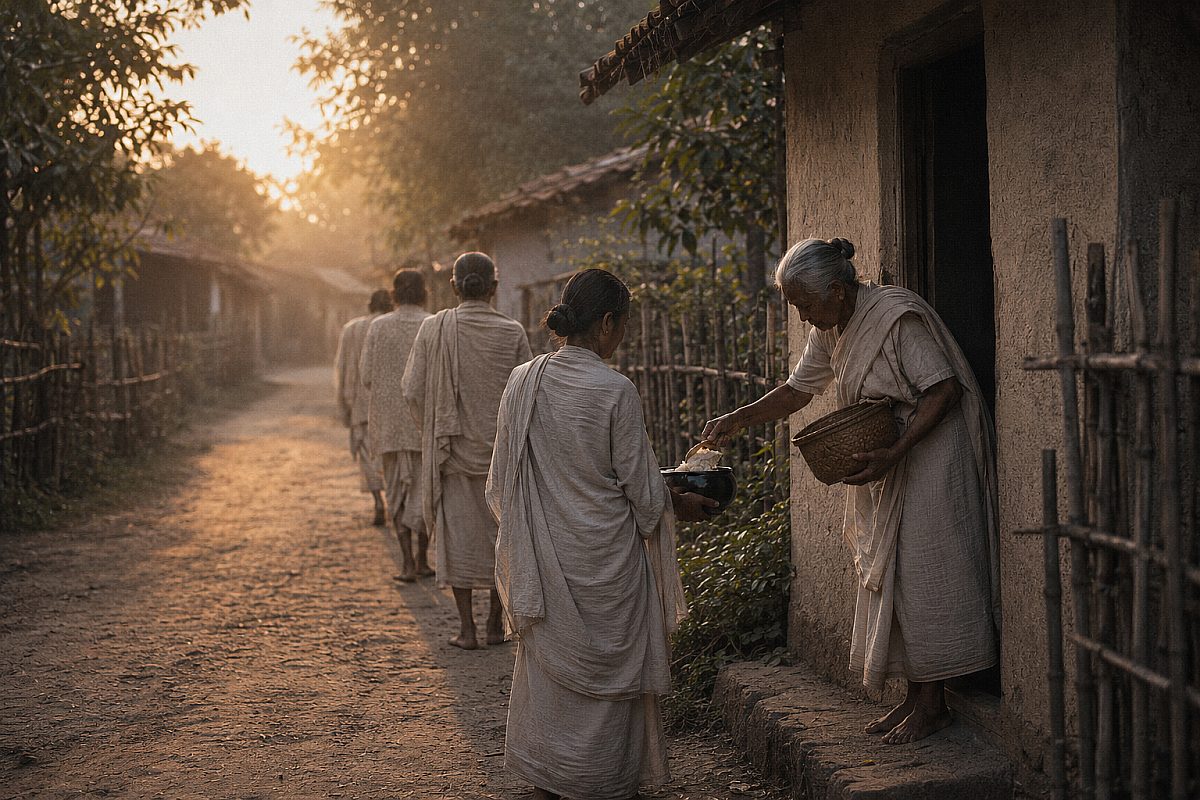
There's a detail in the monastic record that's easy to pass over. The Buddha's monks didn't stay in the forest. Each morning, before it got hot, they walked into the village and stood silently with a bowl. They didn't preach and they didn't ask. They also didn't choose: good rice and burnt rice went into the same bowl, and they ate both. Then they walked back.
So one of the strictest solitary traditions we know of made daily contact with ordinary, busy householders a requirement, and set it up so the monk was the one receiving. Other traditions that lasted had something similar. The Benedictines took in travellers. Sufi lodges fed whoever showed up at dusk. The ashram had a gate, and it was left open.
Gandhi's ashram is the closest precedent for what we're describing, so it's worth being clear about what it was. It wasn't a way of keeping people in line. Shared meals, shared work, discipline people chose for themselves, an hour of spinning thread nobody needed: these were conditions, set up so that cooperation was the easy thing rather than something you had to force. Most institutions are built to hold back our worst tendencies. Gandhi was trying to arrange a place where the better choice was also the easier one.
The monastery was never a fortress. Its walls let things through, and that mattered.
An hour of sitting before dawn, some movement, shared chores, and a circle each night. Every day for a month, until being settled feels less like somewhere you visit and more like where you live.
Seven people, few enough to really pay attention to each other. It's easier to be steady next to someone who is steady. And other people can often see the small work that's yours when you can't.
Work with your hands, a weekly walk into the neighbourhood, and a slower question underneath it all: what would you do if fear weren't making the choice? Most of the service happens in the years after.
Each month starts with someone's gift: a house lent for a season, or the costs quietly covered. When a space opens, some people put their own names forward, and others are suggested by people who know their work.
On a thousand-kilometre walk across India, an old man asked two travellers where they had started. Ahmedabad, they told him, 127 kilometres back. He looked at them for a while and said: So you're not really on a pilgrimage. You're still counting.
The seven aren't chosen because they're alike, or because they already know each other. Some will disagree about most things you can argue about. What they share is a direction: wanting to go deeper than the usual chatter of the mind and senses, and being willing to stop counting along the way.
Howard Thurman, a mentor to Martin Luther King Jr., said each of us has to learn to hear the sound of the genuine in ourselves, or we end up on the ends of strings someone else is pulling. Then he said the harder part: we have to learn to hear it in each other too. For if I cannot hear it, then in my scheme of things, you are not even present.
That's a good description of what the month is for. If you go deep enough into yourself, you find, a bit to your surprise, another person there.
Why seven? A starling in a murmuration doesn't follow the whole flock. It watches the six or seven birds closest to it, and that's enough for thousands of birds to turn together. Attention has limits. Past a certain size, people stop really seeing each other.
Why a month? Ten days can open something in a person. Thirty days can change them. A week is a lovely break. A month is long enough for the practice to become a rhythm, for strangers to become neighbours, and for a guest to start acting like a host.
And the house is always one someone has offered for this purpose: a farmhouse outside Ahmedabad, the ashram at Pavnar where the sisters still spin, a home in the Alps, a retreat centre in Spain, a house in California. You can't make good soil to order. You find it and look after it.
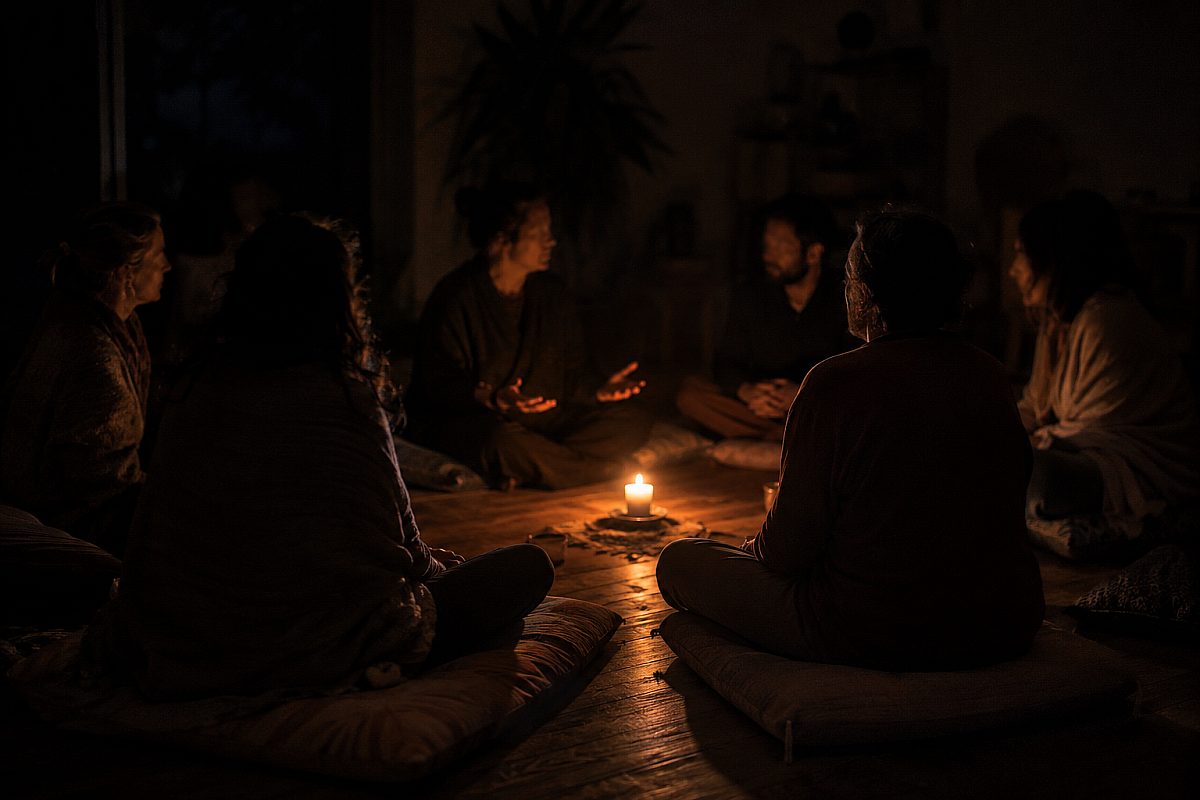
Seven people sitting together in the dark, without talking. Everything else in the month rests on this.
The body wakes up. Today's pair has made breakfast. Nobody has said anything yet, and that's fine.
Four uninterrupted hours for whatever you came to work on: a company, a curriculum, a book, a question you've been stuck on for three years.
A slow lunch. The afternoon is yours for work, rest, or a walk.
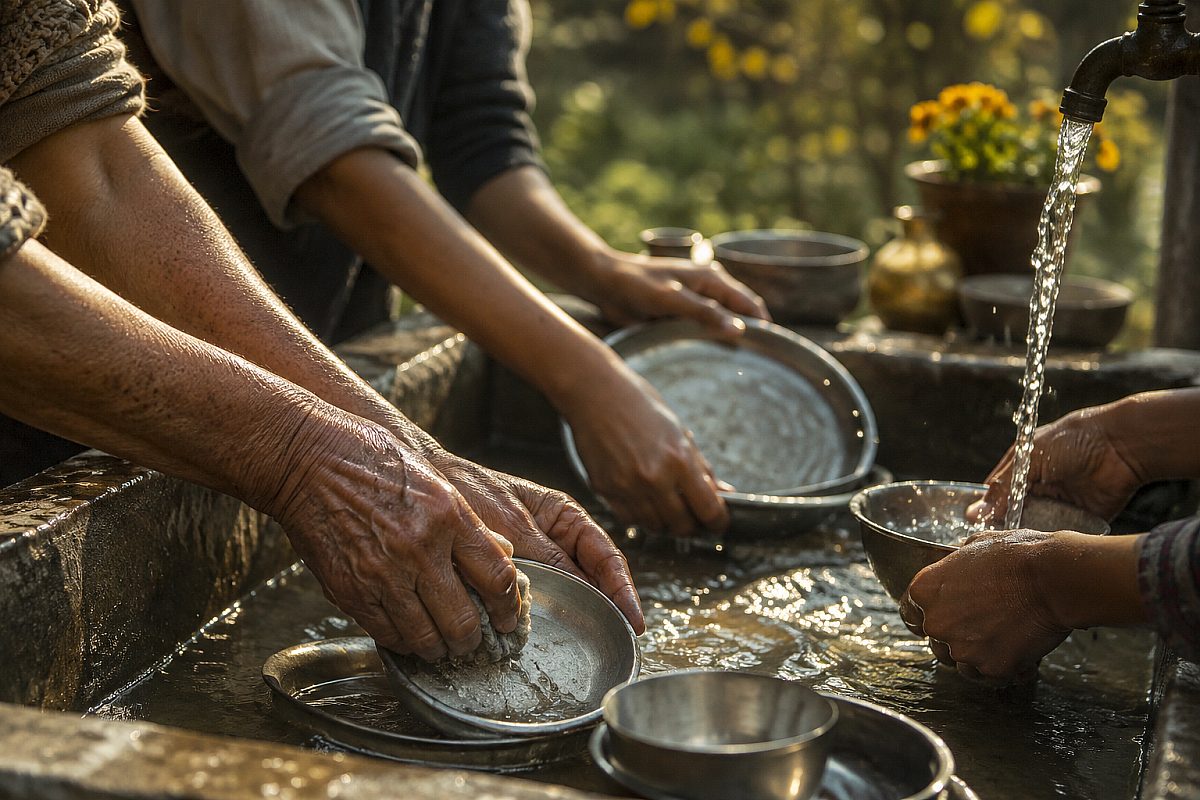
Dishes, floors, the garden, whatever's been broken since March. All seven, every day, whoever they are outside. Titles don't last long at a sink.
Once a week it's eaten in silence, by candlelight.
People talk about what they've lived rather than what they think, and listen without waiting for their turn.
Three things stay fixed: the hour before dawn, the chores at half past four, and the circle at night. And once a week, the bowl. The seven go out into the neighbourhood to be seen, to receive, and to help with something ordinary.
Pleasant, and tiring. The silence is a relief, your body settles into an older rhythm, and you remember what mornings look like.
Something starts to shift. On days when everyone's practice is strong, yours is easier, the way singing is easier in a choir. You get something you didn't produce yourself.
The group stops being charming. Someone gets on your nerves, someone isn't pulling their weight, and it turns out this friction is a big part of why you came.
Six days, each one with the whole circle focused on one person's work. Then the next seven arrive and you hand them the kitchen.
By the third week, someone is doing less than their share. Someone has a manner that bothers you in a way you can't quite name and can't stop noticing. Someone's project is going badly and they bring it into the kitchen at seven in the morning. Two people have become close, and the other five can tell.
Most programmes would treat this as a problem to manage. Here it's what you came to learn from.
Often, when someone unsettles you, it points to something in you rather than in them: a place where your calm turns out to depend on conditions. You won't find that out on a cushion, because a cushion never leaves dishes in the sink. You could sit alone for years and never run into it. Solitude is good at keeping you away from it.
But not every friction is a lesson, and a house that said otherwise would be unsafe. Sometimes what you're noticing isn't your own stuff at all. It's contempt, or pressure, or someone crossing a line, or a person in real trouble who needs more help than a circle can give.
That's why each house has the basics: a clear agreement about how people treat each other, a confidential way to raise a concern with someone outside the group, and the freedom to leave at any time, without explaining and without it counting against you. These aren't there for atmosphere. If a group asks people to stay through discomfort, it has to make the exit easy to find.
Vinoba Bhave, who spent years walking across India asking landowners to give land to the landless, taught that a person's good qualities are doors and their faults are walls. If you want to reach someone, look for the door. Not to be polite, and not by pretending the wall isn't there. Banging your head against a wall just doesn't open it.
There's a catch. When we're unsettled we notice threats more, which means we see more walls. So finding someone's door usually means settling down first. The person across the breakfast table is teaching you exactly what you came to learn, without meaning to and without being thanked for it.
The same action, done with less of yourself in the way, becomes more of a service. So this kind of growth doesn't come from adding things. It comes from taking things away. You can't create the current. You can clear the riverbed.
In 1665 the Dutch scientist Christiaan Huygens was ill in bed, watching two pendulum clocks he had hung from the same wooden beam, resting across two chairs. He noticed they had fallen into step. When he knocked them out of sync, they found each other again. The connection was the beam. It didn't keep time and nobody paid it any attention, but it carried tiny vibrations between the clocks and let them settle into a rhythm neither would have found alone.
Something similar happens between people, and anyone who has been in a good room has felt it. Being settled isn't entirely your own doing. It's easier next to someone who is settled, and it asks something of you in return, because if you're braced and defensive you can't take much in. So practising alone only gets you part of the way. The rest, staying open when someone is difficult and letting another person's steadiness help you, can't be learned in an empty room.
This isn't an argument against silent retreats. Ten days alone with your own mind does something nothing else does, and if you need that, do it first. It helps to have your own footing before you join a group, because groups aren't automatically kind. A mob moves together too, and agitation spreads as easily as calm.
Healthy soil is usually only around five percent organic matter. That small share is what makes it fertile, and nobody has to engineer the rest.
Something like this is true of a life, and learning to live by it comes in three stages. The first is accepting that your part is small. The outcome, the timing, what people make of your work, whether it lasts: none of that was ever really yours to control. It's hard to accept and also a relief, and you can come to it on your own, at four in the morning.
The second stage is harder to do alone: working out which five percent is yours. Get it wrong and you can spend ten years doing something next to your real work. Most of us don't see ourselves clearly enough to judge. We overvalue what we've been praised for and discount the things that come so naturally we assume they don't count.
It isn't advice, and it isn't feedback. It's being seen accurately by people who have nothing riding on what you decide.
The third stage is skill, because your five percent changes. It looks different in a crisis than on an ordinary Tuesday, different at thirty than at sixty. That only comes from practice in real life, over years, which is what the time after the month is for.
A lot of work in the world is driven by compulsion, and from the outside you usually can't tell. Two people build the same kind of organisation. One is doing it out of love; the other is running from something they're afraid of. The org charts look the same, and so does the press coverage. In the short term the frightened one may even do better, since fear is a strong motivator. But it wears that person out, and it tends to spread their anxiety to everyone around them.
Four quiet hours every morning for a month, in a house where nobody is competing and nothing is being scored, is one of the few settings where people can tell which of the two they're doing. People arrive sure about a project and find, around the third week, that a lot of it was momentum, and that something slower has been waiting underneath for a long time. What replaces it is often smaller, odder, and longer-lasting. And whatever you come up with in the mornings has to go out into a real neighbourhood by the weekend and meet someone's actual life, which changes what you come up with.
In the last week, the circle spends one day on each person's work. It's not a pitch session and not a critique. It's six people who have cooked for you, irritated you, and sat next to you in the dark for a month, thinking about your work as if it were theirs, and then letting it go without any claim on it. Most people rarely get that kind of attention, and you can't pay for it.
None of this is the output. What leaves the house is a person with different work in them, and often six others who keep meeting for years and become the first people that work leans on. The real service happens over the following decade, and it's closer to an experiment than a plan: a small pay-forward, with no guarantee it will take. Some efforts do well and some fold. Both teach something, and which one happens was never the thing to optimise for.
You could call it an incubator, as long as you don't mean the usual thing. What goes in isn't an idea, and what drives it isn't ambition. What goes in is a person, what drives it is whatever develops between seven people, and the results show up on their own schedule.
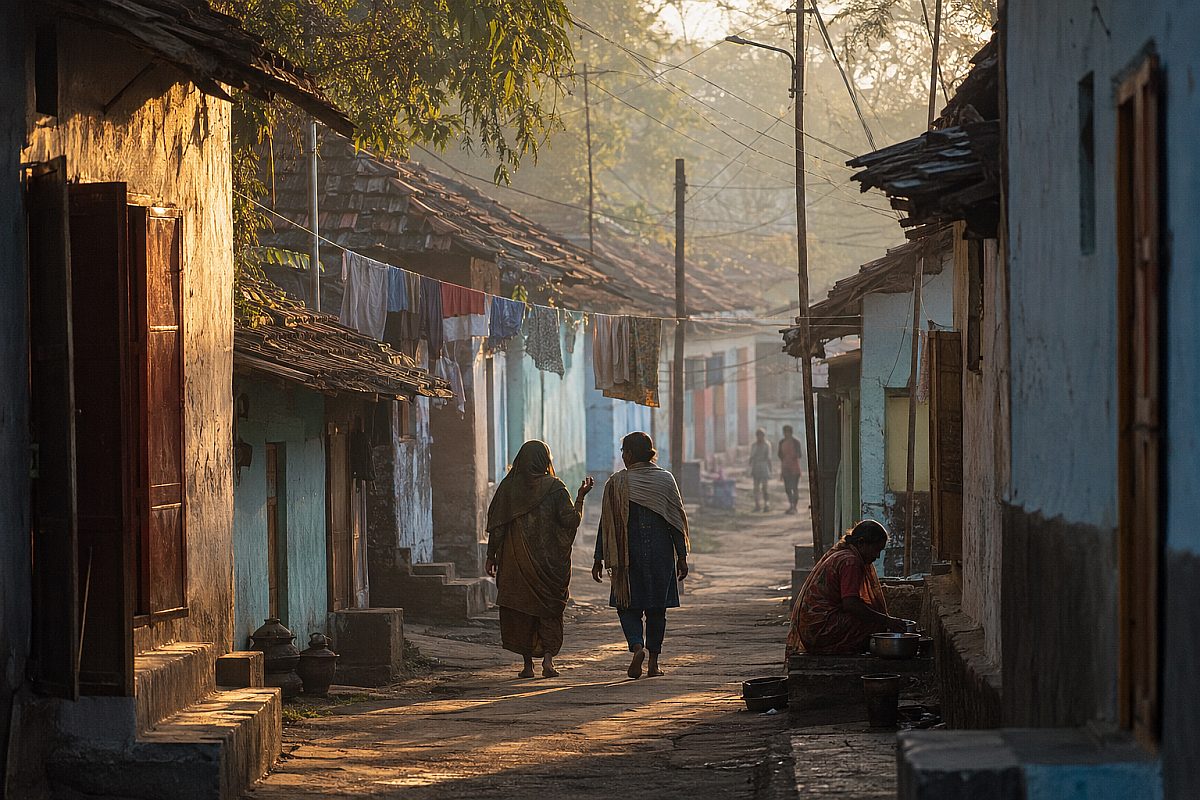
There won't be one central place. There will be many, and that's a safeguard more than a growth plan.
It also continues something that has been under way for a while. Gandhi built an ashram: one location, one central figure, and people came to him. Vinoba then left and walked from village to village for years. What he left behind at Pavnar was a community with no head, run by women who make decisions together and are still spinning decades later. The central figure was already gone. The next step is to let go of the fixed address and the name.
The chemist Ilya Prigogine spent his career studying how order emerges, and his work offers a useful comparison. Living systems keep their shape by staying open and constantly exchanging with what's around them. Close one off and it doesn't stay pure; it runs down. That bears on the question any sensible person should ask about seven people in a house for a month. A cult is a closed system that mistakes its wall for its structure. The secrecy, the control and the high cost of leaving aren't side effects. They're what it takes to keep the wall up.
That said, an argument is a weak safeguard, and we shouldn't pretend otherwise. What actually protects people is more mundane: a clear exit, someone outside the house to call, an honest review afterwards. The risk isn't that the vision is too idealistic. It's that people might trust it too much because it seems so good.
It's also why there's nothing to join. No membership, no titles, no graduation, no alumni network, no letters after your name. Nobody's progress is scored and there won't be an impact report. When you track a virtue, you tend to get people performing it, and the real thing, which doesn't like attention, quietly goes elsewhere.
Not measuring people doesn't mean not being accountable. Each house owes an honest account to the seven who lived there and to the neighbours who fed them: what helped, what went wrong, who was left out. The houses owe that to each other too. Skipping the dashboard only has integrity if it doesn't become a way to avoid hearing hard things.
What passes between the houses isn't a programme. It's something people carry home, which might show up eighteen months later as a Tuesday circle in a town nobody planned for.
Each month starts with someone's gift. Someone who cares about this kind of work lends a house for a season, or quietly covers what a month costs. Nothing gets scheduled before that. The space comes first, and then things open up.
When they do, there are two ways in.
Some people put their own names forward. That takes some honesty: saying you'd like a month of practice, company and quiet isn't a small thing to admit. Others are suggested. A friend, an elder or a colleague notices someone doing hard work with a lot of heart and thinks a season like this would do them more good than another year of pushing. That kind of noticing moves through people who care about each other rather than through a network, and it reaches people no announcement would.
Nirmala Deshpande once arrived in a district in South India with no money, no contacts and none of the local language, and started by sweeping the roads. Because she didn't ask for anything, people came closer. Because they came closer, room was made for her: a corner to sleep in, a seat at someone's meal. By the end of the season something had changed, and she moved on.
She didn't raise money. People looked after her.
Being looked after has to mean more than a bed and meals, though, or the month only works for people who were already free. Thirty days away is easiest for people with flexible jobs, some savings, good health, a passport, and nobody depending on them day to day. So what gets covered is whatever is actually in the way: travel, lost wages, care for a child or a parent, access needs. A house that can't cover those isn't ready for seven people yet.
There's no price. Nobody buys a month and nobody sells one. Whatever comes back comes later and unasked, from people who went before and want the next person to have what they had.
On day twenty-five the next seven arrive, and for the last few days both groups share the house. The people leaving cook the first meal for the newcomers, hold their first circle, and show them where the good tea is and which door sticks. Nobody certifies anyone. The life of the house gets passed along from person to person. Responsibility for everyone's wellbeing doesn't get passed along that way; it stays with the stewards, who are accountable for it.
Then you go home with nothing to show anyone. Maybe a Wednesday circle starts in your living room. Maybe your meetings go differently and nobody can say why. Maybe a year later you walk into a tense room and it calms down, and afterwards someone says there was something about her, I can't explain it. From the outside, that's what it looks like when someone has spent a while being the beam instead of one more clock.

Vinoba once said something about leadership that reads a lot like a design brief. Great people will keep coming along, he said, and they'll matter. But the greatest of them will refuse to lead. People won't follow them. They'll listen, and then find their own way.
His evidence was Bhoodan. Because the whole movement happened on foot, no centre ever formed. The Buddha did something similar, with a few ideas and a lot of walking, and the ideas have lasted about 2,500 years. When you walk, Vinoba said, any leadership that forms is local. Then he corrected himself: not local leaders, local servants.
And he offered an image this proposal keeps coming back to.
A moon is one bright thing that washes out everything else, and the light isn't even its own. A sky full of stars has no centre. There's nothing to gather around, nothing to join, no name on it. Just many small lights far apart, each burning on its own, and together they light the night.
That's what 3.0 means: houses, groups of seven, and no moon.
The practice was never meant to stop with you.
About 1,300 years ago Shantideva wrote a prayer that people still copy out by hand, and what stands out is how modest it is. He asks to be a lamp for anyone in the dark, a place to rest for anyone tired, medicine for as long as anyone is sick, a bridge for anyone who needs to cross. He doesn't ask to be important. He asks to be the ordinary thing someone happens to need, and to keep being it.
Most people have that instinct. Few have the conditions to practise it. That's what the month offers: an hour before dawn so something in you can settle, six other people so it goes further than you'd get alone, and then a door, because a circle that closes around its own warmth has missed the point.
Sit before dawn, until something settles.
Sit with six others, until it deepens.
Then take it out to people who will never know
where it came from.
This is a vision still being worked out, not a finished programme, and it will be shaped by whoever thinks it through with us. If it raised something for you, whether a question, a disagreement, a house or a name, we'd like to hear from you.
Contact us